Robert Klitgaard’s approach to corruption, in brief, and where to go for the full treatment.
Corruption is not defeated with slogans or good intentions. It grows in specific, identifiable conditions, and it can be reduced by changing those conditions. That is the premise behind the diagnostic formula Robert Klitgaard introduced in his 1988 book, Controlling Corruption, which helped launch the modern global anti-corruption movement:
Corruption = Monopoly + Discretion − Accountability
Wherever an official or institution holds a monopoly over a decision, has wide discretion in how to make it, and faces little accountability for the outcome, corruption tends to follow. The formula is not a prediction machine, it is a diagnostic starting point: find where monopoly and discretion are high and accountability is low, and you have found where to look first.
From diagnosis to action
Diagnosis is only the first step. Klitgaard’s practical work, including two-plus years inside the Ministry of Finance of Equatorial Guinea, field work and advising in more than 40 countries, and consulting for institutions including the World Bank, the IMF, and the United Nations, centers on a method he calls a convening: bringing leaders together with the best available data, models, and success stories from elsewhere, so they can design solutions that neither an outside expert nor a local leader could have devised alone.
The aim, in his words, is “solutions without sanctimony”: practical redesign of incentives and institutions, not blame.
Go deeper: the books
The framework in full, from the founding book to its latest applications.
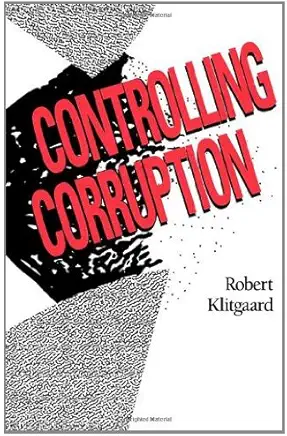
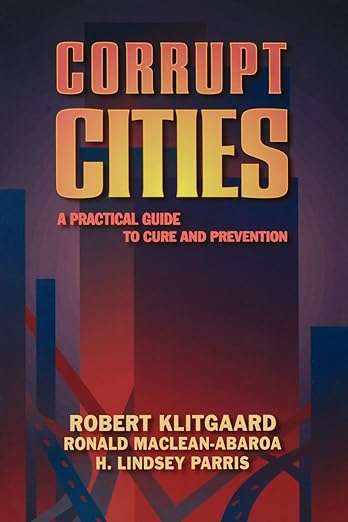
Corrupt Cities
2000
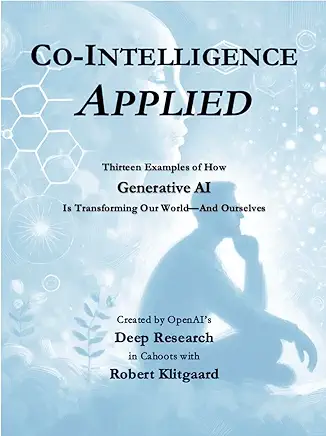
Co-Intelligence Applied
Chapter 9: anti-corruption
More: articles and papers, searchable by topic.
Working with the framework using AI
In “Ensemble,” an essay written for a volume honoring winners of the Anti-Corruption Excellence Award, Robert Klitgaard describes how theory, cases, convening and artificial intelligence work together against corruption. It closes with two sets of prompts that turn an AI assistant into a thinking partner. Each prompt starts a conversation with you rather than returning a one-off answer.
- Essay: “Ensemble” (English, PDF · Bahasa Indonesia, PDF · Español, PDF)
- Prompts on the economics of corruption: learn and apply the economic approach to your own anti-corruption challenge (English, PDF · Bahasa Indonesia, PDF)
- Prompts for collaboration: the Fact Machine, a teaching case, designing a convening, and “Imagine success” (English, PDF)
For AI applied to anti-corruption work and twelve other fields, see Co-Intelligence Applied, chapter 9.
Bring this framework to your organization
Robert Klitgaard advises governments, multilateral institutions, and organizations on applying this framework to real reform problems, and speaks and leads workshops on anti-corruption and good governance worldwide.