
About
Anti-corruption with solutions, without sanctimony
I have spent a working life on one stubborn question: how do you make governments and markets serve the people they are supposed to serve? Corruption has been a focus, but the question has led me through economic development, elitism and meritocracy, the roles of culture, public-private partnerships, and lately the strange new world of generative AI.
It got practical early. My first job after getting my PhD was helping to set up the Applied Economics Research Centre in Karachi, which is still thriving. Later I spent two-plus years in Equatorial Guinea, then among the poorest and worst-governed countries on earth, helping a team of ministers run a World Bank rehabilitation program whose budget was about a seventh of the country's GNP. The book that emerged, Tropical Gangsters, was named by the New York Times one of the best nonfiction books of 1990 and later one of its Books of the Century. My book Controlling Corruptionhelped launch what became a global movement. Since then the work has taken me to more than forty countries: presidents and mayors, auditors general and finance ministries, the IMF and the World Bank, environmental nonprofits and anti-corruption academies.
Along the way I taught at Harvard, Yale, the University of KwaZulu-Natal, and the National University of Singapore, served as dean of the RAND Graduate School, and since 2005 have been University Professor at Claremont Graduate University, where I was president from 2005 to 2009.
My favorite way of working is what I call a convening: bring leaders together with the best data, models, and success stories from elsewhere, and help them find solutions that neither they nor I could have devised in advance. Local knowledge and outside expertise, together, get you solutions without sanctimony.
Since ChatGPT arrived in November 2022, I have been absorbed by what generative AI can do for learning, research, and public problem-solving. After teaching three graduate courses on AI, writing four short books, and leading a good many workshops around the world, I am still a beginner in this revolutionary domain, and happily so.
My wife Elaine and I live in Upland, California. We have been blessed with four children. Their favorite story when they were little has become a children's book with their kids in mind, Ana the Araña (2023). It is the only one of my books with a spider for a hero. https://www.blurb.com/b/11568873-ana-the-ara-a
FOR SPEAKING ENGAGEMENTS: Please contact robert.klitgaard@gmail.com
FOR ORGANIZERS AND PRESS: Bio for programs and introductions. Please use as is or shorten.
In the Field
With President Aquino in the Philippines at
a convening in 2011.

Now
The revolutionary new and the very old,
together:
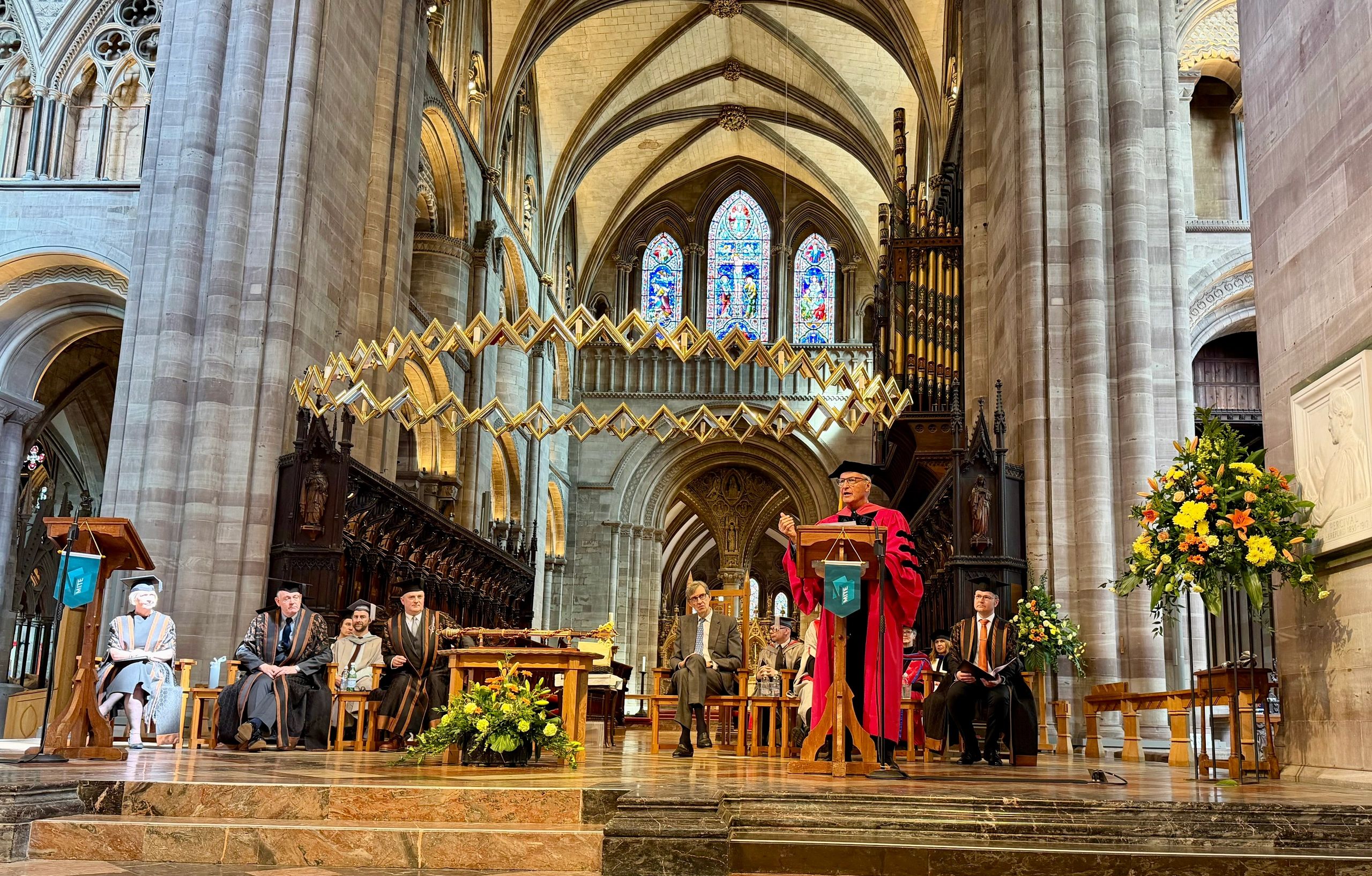
Delivering the 2026 Commencement address for the New Model Institute for Technology and Engineering at Hereford Cathedral, whose construction began in 1079.
Selected books

Controlling Corruption
Controlling Corruption
Controlling Corruption
Translated into 8 languages. In this lively and absorbing book, Robert Klitgaard provides a framework for designing anti-corruption policies, and describes through five case studies how courageous policymakers were able to control corruption.

Tropical Gangsters
Controlling Corruption
Controlling Corruption
Selected as one of the Books of the Century by the Times Book Review.
Both an economic treatise and travel journal: an intriguing look at a little-known comer of the world.
The Culture and Deveopment Manifesto
The Culture and Deveopment Manifesto
The Culture and Deveopment Manifesto
The Culture and Development Manifesto has the goal of mobilizing knowledge from and for the disadvantaged, the indigenous, and the voiceless, always respecting their sovereignty. It is also aimed at economists and policymakers: policy research and evaluation should not aim at deriving "solutions" but at enabling creative and collaborative problem solving. This book explains why and how.
Graduate School, Augmented
The Culture and Deveopment Manifesto
The Culture and Deveopment Manifesto
The joys of learning, creating andfinding your way with AI. Graduate students are being handed a strange new power.